A lot of people meet the phrase “house and land package” and assume it means a finished house on the market. That assumption leads to confusion about how you pay, what duty is charged on, and whether a foreign buyer can buy one at all. This article sets out how the product actually works under the rules that apply in Queensland.
House and land packages in Brisbane are two things sold together: a block of land, and a home to be built on it. The buyer signs two separate contracts — a land contract with the developer and a building contract with the builder. Because the home has never been occupied, the package sits in the new-property category under Australian rules.

What a house and land package is
A house and land package is land and construction bundled into one commercial offer, instead of the buyer sourcing a block and then finding a builder separately.
The two components
| Component | What it is | Who sells it |
|---|---|---|
| Land | A registered or proposed lot in a residential estate under development | The land developer |
| House | A design from the builder’s range, to be built on that lot | The builder |
The two are marketed together under a single headline price, but legally they remain two transactions. That is the fundamental difference from buying a completed home.
How it differs from buying a completed home
| House and land package | Completed home | |
|---|---|---|
| Number of contracts | Two | One |
| When you take possession | After construction finishes | At settlement |
| How you pay | By construction stage | On one contract’s settlement schedule |
| Category under Australian rules | New property | Depends on the state of the home |
| Design choice | From the builder’s range | As it stands |
The two-contract structure
The two-contract structure causes more confusion than anything else about this product, because it changes both how you pay and how duty is assessed.
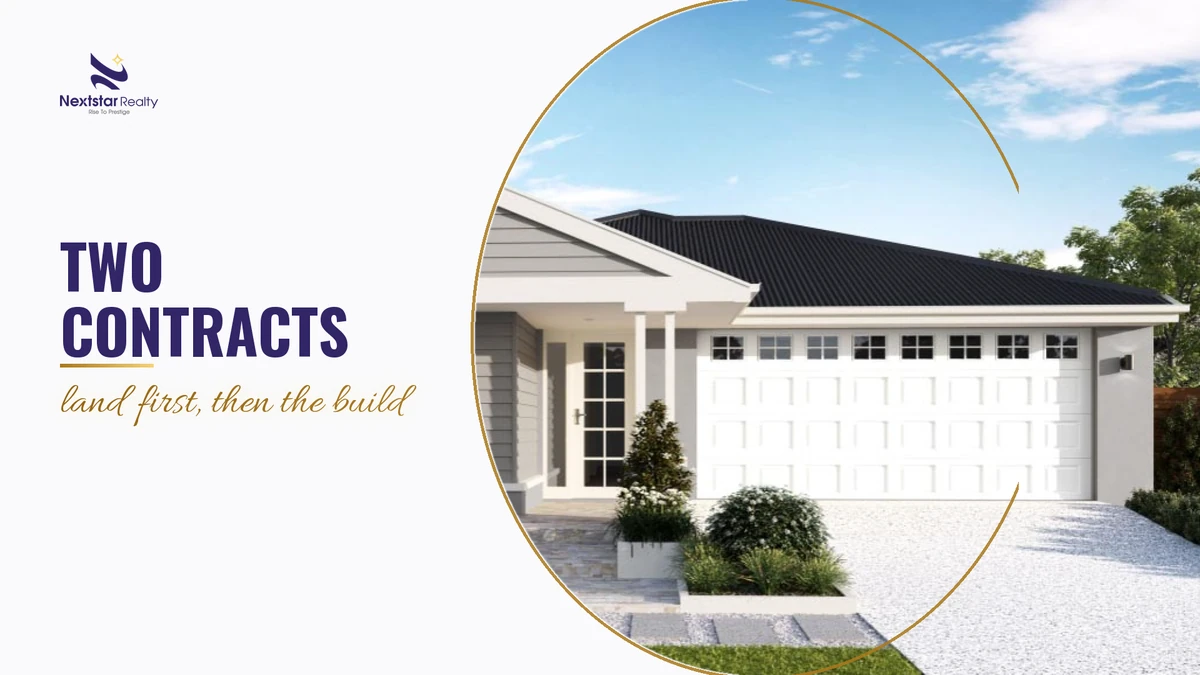
The common assumption is that a package works like buying a house: one contract, one payment, keys. In reality the buyer signs two separate contracts. The land contract settles first, once the lot is in a position to be transferred — which depends on the registration timetable of the particular estate. The building contract is then paid in stages as construction progresses, one payment per stage. So the buyer’s cash flow is spread across the build rather than concentrated at a single date.
What follows from that structure:
- State transfer duty is generally assessed on the value of the land, not on the total package price — because at the time of the land transaction the house does not yet exist. This is why the duty figure often comes in lower than people expect. The mechanics are set out in our guide to transfer duty in Queensland.
- Lenders draw down by stage rather than releasing the whole amount at the start.
- Completion timing depends on several things — single or double storey, the builder’s program, weather, materials supply. There is no single timeframe that applies to every package.
Contract terms, when payments fall due as a matter of law, and registration of title all sit with a solicitor. Have those reviewed before you sign anything. Nextstar Realty does not provide legal advice.
Before you sign the building contract, run the builder through the public registers — the five-minute version is in our guide to the QBCC licence check.
Turnkey and non-turnkey
These two terms decide how much you have to spend after the build finishes.
| Turnkey | Non-turnkey | |
|---|---|---|
| What it means | Built to be handed over ready to move into | Stops at the base build |
| Typically included | Flooring, blinds, clothesline, driveway, landscaping, letterbox | Structure and basic finishes |
| Typically left to the buyer | Fewer items | Flooring, blinds, landscaping, fencing and similar |
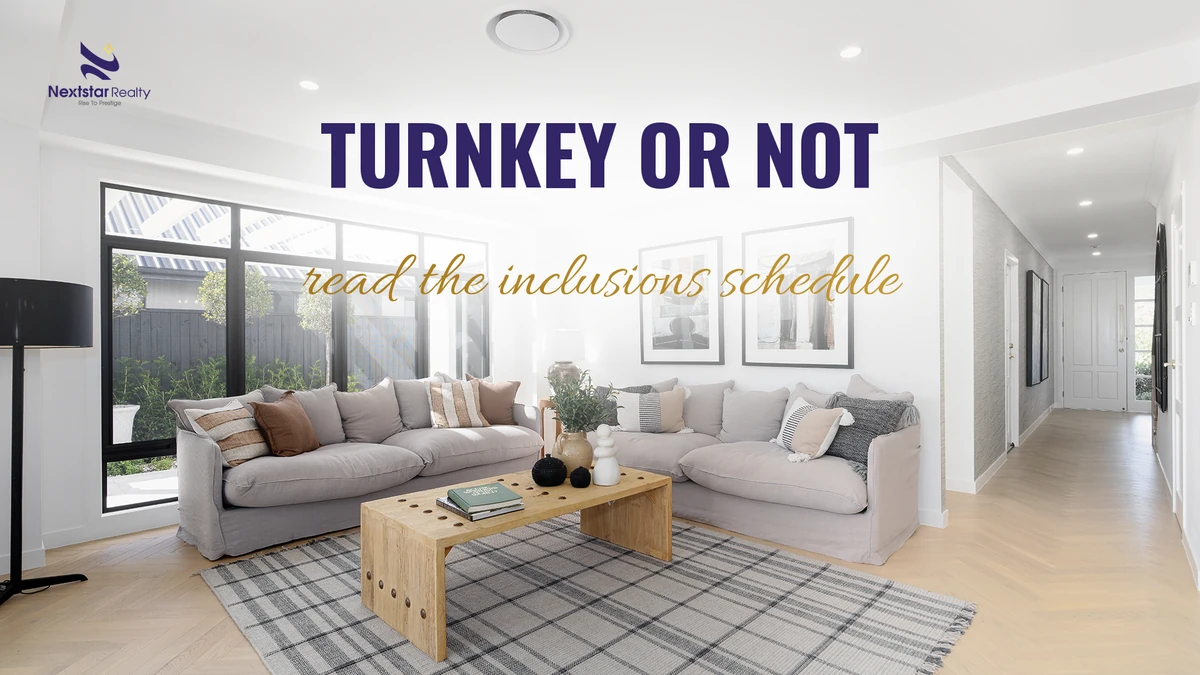
One important caveat: the scope of the word “turnkey” is not standardised between builders. Two packages both labelled turnkey can include different things. The way to check is to read the inclusions schedule attached to the building contract and compare it line by line, rather than trusting the label on a brochure.
Some new estates are registered as community titles schemes, and where an estate has a body corporate there is an additional layer of scheme rules and levies to read.
Can a foreign buyer buy a house and land package?
Generally yes, because a house and land package falls in the new-property category — the category foreign buyers remain within scope to be considered for.
Treasury’s Guidance Note 10 refers to a ban on foreign persons purchasing residential land (established dwellings), with limited exceptions. Because the lot in a package is vacant land and the home has never been occupied, a house and land package is not the kind of property that ban reaches. Which categories of residential property a foreign person may acquire, and the current position on the ban and its exceptions, should be checked on the ATO and Treasury guidance for your own circumstances.
A foreign buyer still needs approval before purchasing and must pay the corresponding fee by value bracket — the full 2026-27 brackets are in our guide to FIRB application fees.
Costs to budget beyond the package price
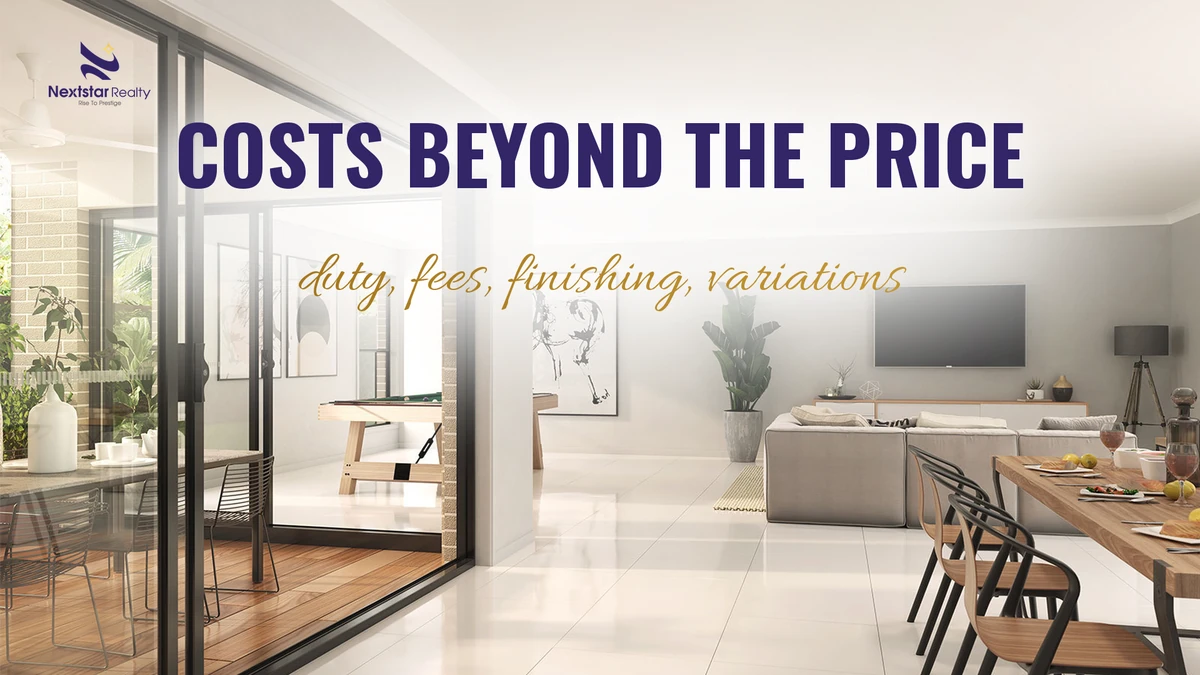
The advertised price of a package is the land price plus the build price. Beyond that, a buyer needs to allow for several other items.
| Cost | Note |
|---|---|
| State transfer duty | Generally assessed on the land value |
| Additional foreign acquirer duty (AFAD), QLD | Current rate 8%, charged on the dutiable value of the AFAD residential land attributable to the foreign acquirer’s interest — not 8% of the transfer duty figure |
| Foreign investment application fee | By value bracket, indexed on 1 July each year |
| Solicitor’s fees | Per their quote |
| Inspections and valuations | Per file |
| Finishing costs after handover | Depends on whether the package is turnkey or non-turnkey |
| Variations during construction | Design changes, site conditions, material movements |
How large these are relative to the package price varies from file to file. For a foreign buyer in Queensland who is also paying AFAD, the total can be materially higher than for a domestic buyer — the state-level charges are set out in foreign buyer duty and the land tax surcharge. Build the allowance for each specific option rather than applying a single percentage.
Queensland’s concessions for new homes, and who still qualifies from 1 August 2026
Queensland runs a group of concessions that apply specifically to new homes and vacant land — exactly the category a house and land package sits in. The residency condition attached to them changed recently, so this section is worth reading carefully.
| Benefit | What it does | Conditions |
|---|---|---|
| First home (new home) concession | A full concession reducing transfer duty to nil, with no cap on the value of the home | Contract signed on or after 1 May 2025. For transactions entered into on or after 1 August 2026 the claimant must be an Australian citizen, permanent resident or specified foreign retiree |
| First home vacant land concession | A full concession on residential vacant land bought to build a first home on, with no value cap | Contract signed on or after 1 May 2025, plus the same residency condition from 1 August 2026 |
| First home owner grant | $30,000 on a new home valued under $750,000 | Contracts signed on or after 20 November 2023 |
Because a package runs on two separate contracts, a first home buyer’s grant application is usually assessed as a contract to build rather than as buying a new home — the conditions differ, and they are set out in our guide to the Queensland first home owner grant.
The change to read carefully if you are not a citizen or permanent resident: for transactions entered into on or after 1 August 2026, a claimant for the home concession group — including both the first home (new home) concession and the first home vacant land concession — must be an Australian citizen, a permanent resident or a specified foreign retiree. The requirement does not apply to transactions entered into before 1 August 2026.
The conditions for each concession still need to be checked against the individual file, and some carry an obligation to move in within a set period after the transaction completes.
Who the product suits
Buying from overseas, as an investment
The point to hold on to is that a package sits in the new-property category, outside the reach of the established-dwelling ban. You need to add the foreign investment application fee and Queensland’s AFAD to the budget.
One budgeting note that matters: for transactions entered into on or after 1 August 2026, someone who is not an Australian citizen or permanent resident falls outside the duty concessions above. Do not deduct those concessions from your allowance.
Cash flow is spread across the construction stages, so a transfer plan that matches the stage payments is part of the preparation.
Living in Australia, buying to live in
If you are a citizen or a permanent resident, you are outside the foreign investment approval process and outside AFAD, and you remain within scope for the concessions above. Queensland’s new-home concession group is the part worth the most careful checking, because it can move the total cost significantly.
If you hold a temporary visa, the position is different again, and worth confirming with a solicitor against the date you expect to sign.
Frequently asked questions
Is a house and land package really two separate contracts?
Yes. The buyer signs a land contract with the developer and a building contract with the builder. They run on different payment schedules: the land contract settles first, and the building contract is paid by construction stage.
Can a foreign buyer buy one?
Generally yes, because the package is in the new-property category rather than the established-dwelling category the ban applies to. A foreign buyer still needs approval before purchasing and pays a fee based on the value of the property.
Is duty charged on the land or on the whole package?
Generally on the land value, because the home has not been built at the time of the land transaction. How it works out depends on the contract structure of the specific package, so have a solicitor confirm it for your file.
Can a foreign buyer claim the Queensland duty concessions?
For transactions entered into on or after 1 August 2026, the home concession group requires the claimant to be an Australian citizen, permanent resident or specified foreign retiree. The requirement does not apply to transactions entered into before that date. The conditions need checking file by file.
What is the difference between turnkey and non-turnkey?
A turnkey package is built to be handed over ready to move into, typically including flooring, blinds, driveway and landscaping. A non-turnkey package stops at the base build. The scope of “turnkey” varies between builders, so read the inclusions schedule of each contract.
How do the stage payments work?
The land is paid for at land settlement. The build is paid in stages as construction progresses, one payment per stage. How many stages there are, and what proportion each carries, is set out in each builder’s building contract.
Next steps
A house and land package suits a buyer who wants a brand new home in a growth estate, and it is the category a foreign buyer remains within scope for. What decides the outcome is reading both contracts closely, comparing the inclusions schedule line by line, and building a cost allowance for your own file — including the concession conditions that changed on 1 August 2026.
To see real options, look at the current Brisbane projects and the house and land packages in Brisbane we have available, then book a consultation to go through your own numbers.
About Nextstar Realty
Nextstar Realty (Nextstar Investment Group Pty Ltd) is a licensed real estate agency in Queensland, based in Rocklea, Brisbane. It sells new-build homes in Brisbane, Queensland, including house and land packages, townhouses and new apartments, and works with buyers in Vietnamese and English. Articles on this blog are general information and cite government sources. Nextstar does not provide legal, financial or tax advice. You can see the projects currently for sale or book a consultation.
Sources
- QRO — First home (new home) concession, and First home vacant land concession
- Queensland Government — Eligibility for the first home owner grant
- QRO — Additional foreign acquirer duty (AFAD)
- Australian Treasury — Guidance Note 10: Fees, Version 11 (31 July 2026)
- ATO — Foreign investment in Australia: types of property a foreign person can buy
- Queensland Government — Transfer duty concessions and exemptions
Note: the rates, thresholds and conditions in this article were checked against the published Australian government sources on 3 September 2026. Rules can change and every file has its own facts — take advice from a solicitor, a registered tax agent or a licensed finance professional before making a decision.
This article is general information only and does not take into account your personal circumstances, financial situation or objectives. It is not legal, financial or taxation advice. You should obtain independent professional advice before making any property decision.