Standing in front of the lot plan at a new estate, most buyers look at two things: price and area. Both matter, but neither tells you which house designs will fit the block, whether the site works will cost extra, or whether the finished house will be hot.
Choosing a block of land in Australia comes down to seven things: orientation relative to north, frontage width, slope, flood exposure, where the lot sits within the estate, what runs under the ground, and what is written into the title documents. Area and price are the two you can see straight away, and they are not the two that decide the most.

1. What is different about buying land in Australia
The first thing to get right is the sun. Australia is in the southern hemisphere, so the path of the sun runs to the north — the opposite of what a northern-hemisphere rule of thumb would tell you. Advice that is correct in Hanoi or Ho Chi Minh City points the wrong way in Brisbane.
Three other differences worth knowing before you start:
- Land is sold through planned estates rather than lot by lot. The estate carries a shared set of design, materials and fencing rules, and you take possession once the infrastructure is finished, not immediately.
- The dimensions of the block constrain the house design. Builders work from a range of designs, each needing a minimum width. Choosing a narrow block rules out part of the catalogue.
- A lot of what matters about a block is in the title documents rather than visible on the ground — that part is covered in section 6.2 below.
If you are not yet familiar with how a package works, read house and land packages in Brisbane first — choosing the block is one step inside that process.
2. Orientation: in Australia, north is the sunny side
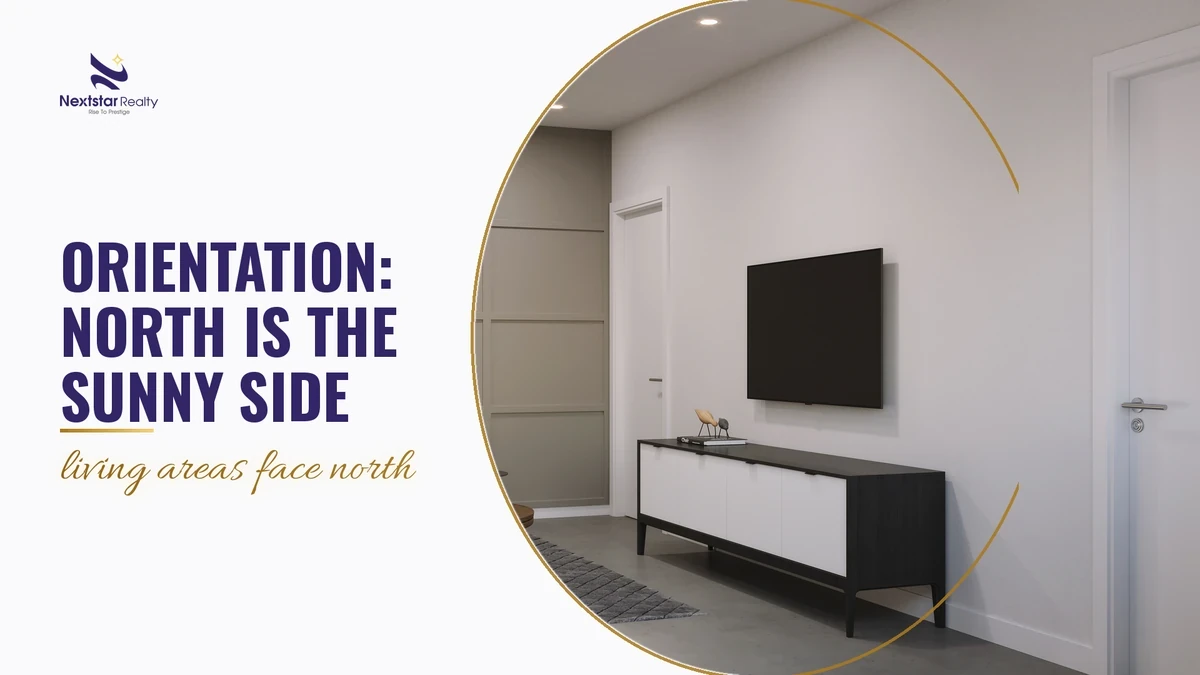
In Australia the living areas of a house are usually placed facing north. The Australian Government’s Your Home guide explains why: because the path of the sun in Australia is to the north, north-facing rooms receive sun for the longest period of the day in winter and are easily shaded by the eaves of the roof in summer.
The same source sets out what to do when buying or building a new home:
- Locate living areas on the north side of the home to take advantage of winter sun, and locate openings to capture cooling summer breezes, with proper shading.
- Use smaller, well-shaded windows to increase cross-ventilation to the south, east and west.
- Avoid west-facing bedrooms, as they can become too hot, making sleeping difficult.
- Locate utility areas — laundries, bathrooms and garages — on the south or west side to act as a buffer, where possible.
There is a climate layer on top of this. Your Home groups Australia into 8 main climate zones and notes that warm humid climates — which it defines as coastal locations above the Tropic of Capricorn — are the exception, where orientation is about access to cooling breezes and shade rather than solar access. Brisbane sits below that line, so the north-facing guidance above applies; but in a subtropical climate the breeze and shade question is still worth asking about a specific block. Which climate zone your block falls in is a question for your builder or designer.
What to do on site: open the compass on your phone and set it to true north, not magnetic north — Your Home makes the point that solar north and magnetic north can be significantly different depending on where you live. Then stand where the back yard will be and see which face gets the sun.
3. Frontage width decides which house designs you can choose
The short answer: when choosing a block of land, a narrow frontage means a narrow catalogue.
Australian builders sell from a set range of designs, each built for a band of block widths. The required side setbacks take a slice out of that width as well. So two blocks of identical area but different proportions produce two different lists of house designs.
| Block width | Usually affects |
|---|---|
| Narrow | Single garage, rooms arranged front to back, fewer side windows |
| Medium | Double garage, more flexible layouts |
| Wide | Single-storey designs that spread sideways, more usable side yard |
What to do: before committing to a block, ask the builder for the list of designs that fit that specific lot, with a siting plan showing the house on the block. This is the step people skip, and then discover the design they liked does not fit.
4. Slope: the biggest cost variable, and the least asked about
The steeper the block, the more site preparation: cut, fill, retaining walls, drainage. This is the most common source of extra cost in the early part of a build contract.

We do not put a figure on it here, because that cost is worked out by each builder from the contour survey and soil classification of the specific block — there is no general rate to quote.
What to do on site:
- Stand at the front boundary and look towards the rear, then do it the other way around. A height difference you can see with the naked eye is worth asking about in detail.
- Ask whether the block already has a contour survey and soil classification, and ask for copies.
- Ask the builder directly: for this block, which site preparation items sit outside the standard quote.
- Visit after rain if you can. Where the water sits is information that does not appear on any drawing.
A sloping block is not a bad block. Plenty of them give good views and suit a split-level design beautifully. The problem is only ever finding out after the deposit rather than before.
5. Check flood exposure before you pay a deposit — Council’s free tools
For blocks inside Brisbane City Council, you can check this yourself before you meet anyone.
Council publishes flood information through Flood Information Online, which holds the Flood Awareness Map and the FloodWise Property Report. Council’s own instruction is a three-step one: first, use the Flood Awareness Map to search an individual address or lot to see whether flooding is likely or unlikely and what types may be present; second, use the technical FloodWise Property Report for more technical flood information, a report designed to assist with planning and building; third, use the linked material to understand flooding in Brisbane generally.

Two things to understand about what the map shows. It displays the probability of a flood occurring from one or more sources — creek, river and storm tide — using a likelihood scale: high (5%), medium (1%), low (0.2%) and very low (0.05%) chance annually. Separately it shows the impact of overland flow flooding, described as high, medium or low impact areas.
Overland flow is the one to pay attention to on new land. Council describes it as run-off that travels over the land during heavy rainfall events, and notes that it can be unpredictable, occurring very quickly and for short durations.
One limit worth knowing: Council states the Flood Awareness Map does not provide information about the depth or speed of flood water, and it is not a real-time flooding tool.
What to do: check the map before you go and look at the block, and if the lot sits in an area with recorded exposure, put the report in front of your builder and your solicitor before you sign anything.
If you are buying a lot in a scheme with a body corporate, note that flooding history is among the details a seller is not required to include in the disclosure statement — see buying a body corporate property.
6. Where the lot sits, and the constraints you cannot see
The last two factors are about where the block stands within the estate, and what is written into its documents.
6.1. Corner lots, cul-de-sac lots, park-facing lots
Within the same estate, position changes daily life.
| Lot type | Usually seen as an advantage | Worth weighing up |
|---|---|---|
| Corner lot | Two open sides, more light, flexible driveway placement | More fencing, setbacks applying to two frontages, noise from two sides |
| Cul-de-sac lot | Little through traffic, safer for small children | The shape is sometimes irregular, which narrows the usable area |
| Park-facing lot | Outlook over green space, no house directly behind | Public activity close to the house; check the playground’s hours |
| Mid-block lot | Usually cheaper, better wind protection | Fewer open sides, more dependent on the neighbouring layouts |
What to do: visit the estate at two different times of day, and once on a weekend. Traffic, noise and the afternoon sun are hard to picture from a plan — you have to be standing there.
6.2. What runs under the ground and along the boundary
This part starts to touch the legal documents, so we will name the issue and stop there.
A block can come with constraints you cannot see: a strip of land set aside for infrastructure running through the lot, design rules that apply across the whole estate, or notations specific to that parcel. These directly affect where you are allowed to place the house and what you can add later.
Reading and interpreting those documents is work for a licensed solicitor or conveyancer. Nextstar Realty is a real estate agency; we do not interpret contracts or title documents in place of your lawyer.
What to do: ask the seller for the full set of documents for the lot, send all of it to your solicitor, and ask them one question: on this title, is there anything that affects where the house can sit or what can be added later?
Choosing the block sits in the middle of the whole journey. What comes before and after is set out in our article on the new-build construction process in Australia.
7. Common misconceptions when choosing a block of land
Misconception: a bigger block means a bigger house.
Reality: area is one factor, but frontage width and the required setbacks decide how much of the block you can actually build on. A deep, narrow lot can yield less than a smaller, squarer one.
Misconception: you choose the aspect in Australia the same way you would at home.
Reality: Australia is in the southern hemisphere and north is the sunny side. Plenty of buyers also weigh feng shui when choosing an aspect, and that is a personal choice — what we add is the fact of where the sun goes, so you can weigh both.
Misconception: the price of the lot covers everything needed to start building.
Reality: site preparation depends on the terrain and soil of the individual block, and not every item is in the standard quote. Ask before you pay a deposit.
Misconception: land in a brand-new estate does not need a flood check.
Reality: overland flow depends on local terrain, and Council itself describes it as unpredictable and fast. Checking Council’s map takes a few minutes and is worth doing.
8. Frequently asked questions about choosing a block of land
Which way should a block face in Australia?
According to the Australian Government’s Your Home guide, living areas should face north to take advantage of winter sun while being shaded by the eaves in summer, and west-facing glazing should be limited. In warm humid climates — coastal locations above the Tropic of Capricorn — orientation is instead about access to cooling breezes and shade.
Can you build on a sloping block?
Yes. Many sloping blocks give good views and suit a split-level design. What matters is knowing the volume of site preparation in advance so it goes into the budget — through the contour survey and a direct conversation with the builder.
How wide does a block need to be?
There is no single number, because every builder’s range has different width requirements. The practical way to settle it is to pick the design you want first, then ask the builder what minimum block width that design needs.
How do I find out whether a block floods?
For blocks inside Brisbane City Council, search the address or lot on Council’s Flood Awareness Map. For technical detail, download the FloodWise Property Report from the same place. Note that the map shows likelihood and overland flow impact, not the depth or speed of water, and it is not a real-time tool.
Conclusion
Choosing a block of land is the hardest decision in the whole process to reverse — you can change the house design, you cannot change the block. Every factor in this article can be checked before you pay a deposit, most of them with one site visit and a few questions asked in the right place.
Next in the sequence: the new-build construction process, the Queensland-specific approvals in building a house in Queensland, and a QBCC licence check on the builder. For the state charge on a vacant land contract, see transfer duty in Queensland.
If you are choosing a lot in a house and land estate in Brisbane and would like someone with you on the site visit, see our Brisbane projects or book a consultation.
Sources
- Your Home — Orientation, Australian Government
- Your Home — Design for climate, Australian Government
- Flood Information Online, Flood Awareness Map and FloodWise Property Report — Brisbane City Council
- Understanding flood likelihood and impact — Brisbane City Council
- Flood information frequently asked questions — Brisbane City Council
- Brisbane City Council — Flood Awareness Map
- FloodWise Property Report
Note on scope and timing: the guidance and figures above were checked against the Your Home and Brisbane City Council pages on 3 September 2026. Council tools and their terminology change, and areas outside Brisbane City Council are covered by their own council’s mapping — check the source that applies to your block at the time you buy.
This article is general information at the time of writing and is not legal, engineering or financial advice. Anything to do with title documents, contracts and legal constraints on a parcel belongs with a licensed solicitor or conveyancer; anything to do with structure and footings belongs with an engineer and the builder.
This article is general information only and does not take into account your personal circumstances, financial situation or objectives. It is not legal, financial or taxation advice. You should obtain independent professional advice before making any property decision.